



Towards a New Green Industrial Revolution?
The UK government announced last week a new 10-point plan that they believe will pave the way for a “new green industrial revolution”. But behind the headlines will the plan live up to expectations? Or is it more about style over substance?
The biggest change announced is the proposed ban on selling new petrol and diesel cars in the UK from 2030. This is good news and creates a real opportunity to move the UK to cleaner air and cleaner technology. As a result of the ban, carbon emissions from road vehicles will fall year on year, helping the climate and supporting those who suffer from conditions such as asthma.
Yet all is not as it seems. To the end of October this year, nearly 1.4 million new cars had been sold in the UK, of which only 75,000 were electric, a meagre 5% of all cars sold. If we are to stop selling petrol and diesel in less than 10 years, we need a huge and rapid shift in how the UK car market works. Is it possible to move the entire production system so fast? In addition, in regards to charging points, most houses, town centres and businesses have very few currently in place. Is it really possible to wire the nation to charging points in nine years? Will heavy goods vehicles – the worst road polluters – also need to develop all-electric fleets?
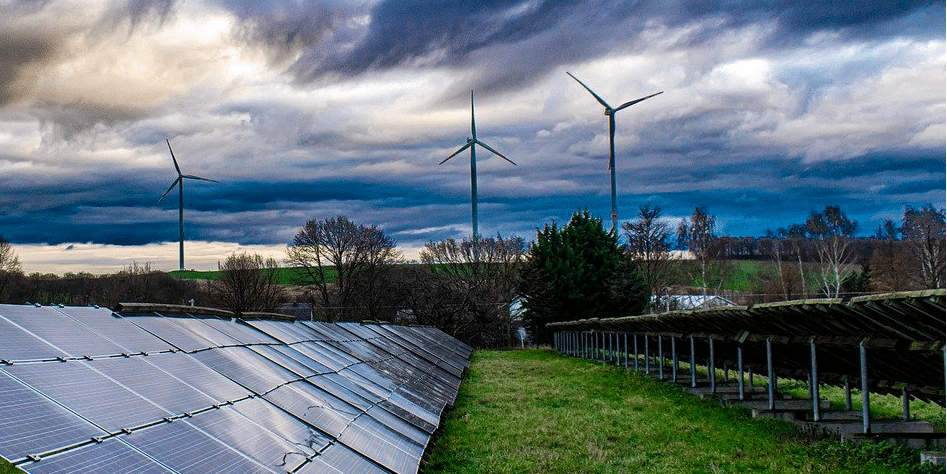
The government also outlined plans to quadruple the supply of offshore wind energy. This is not a new target. It is also a target fraught with environmental risk, since offshore turbines have the capacity to decimate seabird populations and migrating birds; especially at night. More effort must be put into making sure the risk of losing biodiversity to make cleaner energy is brought to near zero. There is also the opportunity from onshore wind farms which, if located very carefully, could provide less expensive sources of wind power for smaller communities and businesses. The ten-point plan, however, makes no mention of investment in much cheaper on-shore wind which is still being effectively vetoed by the government because of opposition in conservative voting rural districts.
Bizarrely, the new green plan also proposes the development of a whole new fleet of, as yet never built, mini nuclear power stations. Apart from accident risks and the unfairness of leaving nuclear waste for future generations, nuclear power continues to be one of the most expensive energy technologies as well as requiring years in building, when we do not have cash or years to spare to reduce our carbon emissions. Yet, in relation to public transport and cycle routes, potentially the greenest options of all for travel and reducing carbon, there is no promise of new money at all.
As a nod to the conservation lobby the government does commit to planting 30,000 hectares of trees every year. But the proposal gives little detail as to whether this would be native mixed woodland, single species plantations for forestry or a mix of the two. The latter may create jobs but could damage upland ecosystems. Suitable sites for mass planting schemes are not mentioned either. Has there been discussion with local community groups, councils, or wildlife bodies on such sites? Is the mix of proposed tree species the right one for a rapidly warming Britain? In short the new plan falls far too short of expectations, and creates as many questions as there are answers.
This was not not the promised new green industrial revolution, though it is a start. However, the lack of wholehearted commitment by the government to address climate change and nature loss was further exposed barely a week after the PM announced his Ten Point Plan. As part of his spending review to help the economy recover from Covid-19, announced on Wednesday 25th November, the Chancellor Rishi Sunak announced massive new investment in a damaging road-building programme, while offering next to nothing for badly needed green schemes.
Clearly, civil society, including whole sections such as the Churches and Christians, will need to be much more vocal, and demonstrate what we are prepared to do ourselves, to convince the government to go further faster and truly commit to going green.
Andy Lester, A Rocha UK Head of Conservation.
Andy: perfectly on point and well said. Where is the substance to this government’s intermittent, ambivalent and contradictory announcements on the true emergency of our age: the Climate Emergency?
Agree – best that can be said is at least the topic was brought up of a Green Plan. When one starts to look it reminds me of a friend who took his classic car in for a service. He was rung and told there was good news and bad news. The good news was the glove compartment was sound and sturdy needing no work on it. The good news is that some issues are being talked about.
Well written, Andy! Thank you for reading between the lines on behalf of ordinary people like me, who have been environmentally aware for 50 years and more. So often, the Government issues headline-seeking, broad statements with very little detail and we rely on experts like you to expound on them, pointing out the details which are missing or contradictory. This week, an announcement covering several popular issues was followed by a contradictory promise of extra investment in off-shore energy and more roads, on top of HS2. Maybe our representatives in London should take a walk in a local park or the countryside occasionally, to persuade them of its value to physical and mental health, at no expense other than a little personal effort?
‘And as in private life one differentiates between what a man thinks and says of himself and what he really is and does, so in historical struggles one must distinguish still more the phrases and fancies of parties from their real organism and their real interests, their conception of themselves from their reality.’
I’ll leave it at that, other than to say thanks, Andy.
Thanks Andy. And let’s not overlook the billions of additional funding pledged for the military, whose environmental impact is eye-watering (even if the weapons are not being used in anger – and far worse if they are).
So what is our next step in bringing these reservations to bear on the Government?